
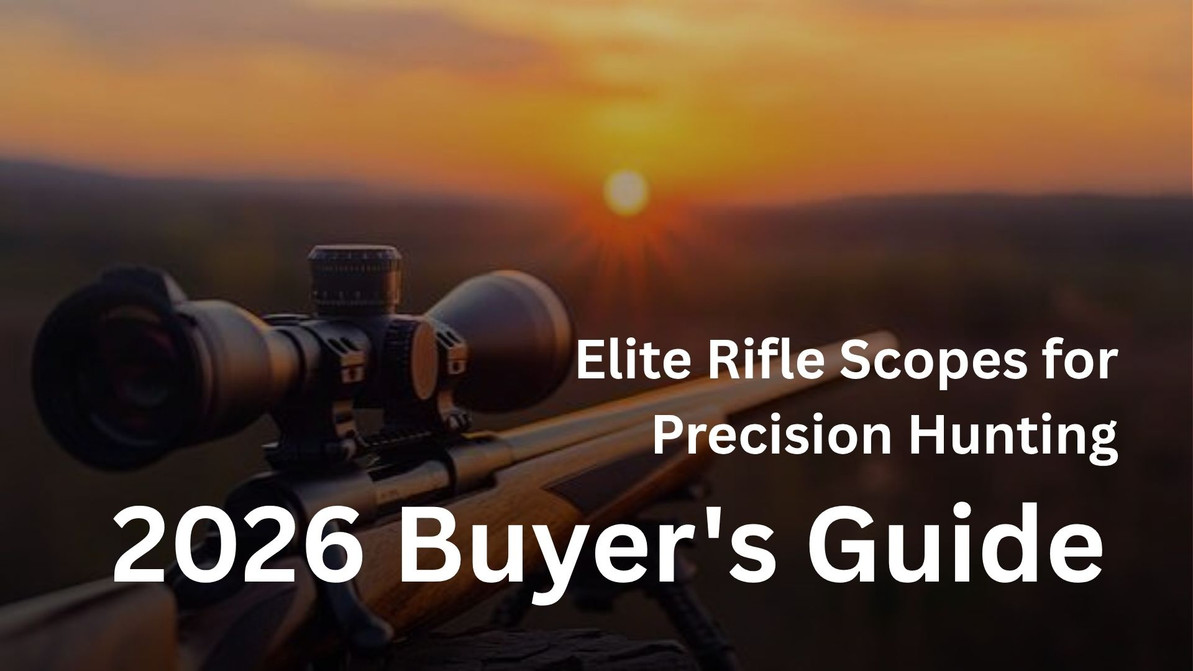
2026 Buyer's Guide: Elite Rifle Scopes for Precision Hunting
A riflescope is part of a complete shooting system. Its optical design, controls, mounting requirements, and reticle should match the rifle, shooting conditions, expected distance, and preferred adjustment method.
What Makes an Elite Rifle Scope Worth Buying in 2026
The right high-performance rifle scope depends on its intended use, expected shooting distance, terrain, and shooting method. Hunting and target shooting place different demands on magnification, reticle design, adjustment systems, and handling.
Safe firearm handling, target identification, training, applicable regulations, and current shooting conditions remain separate considerations when selecting equipment.
Precision Hunting vs. Target Shooting
Precision Hunting Priorities
Hunting scopes need to balance optical performance with practical handling in the field. Brush and timber may favor lower magnification and a wider field of view, while open terrain can make higher magnification more useful.
The correction method is another important consideration. Dialing uses the elevation turret to make a correction, while a holdover reticle provides marked aiming references without changing the turret setting.
Target Shooting Priorities
Target shooting generally places greater emphasis on repeatable adjustments, reticle measurements, parallax control, and higher magnification. Maximum magnification is not automatically the most useful setting, since higher magnification can make movement and atmospheric distortion more noticeable.
Reticle and turret units should match, and available elevation travel should be considered in relation to the rifle, mounting system, and intended shooting distance. Stable mounting and consistent eye position also affect the setup.
Match the Scope to the Rifle and Mount
The scope tube must match the rings or mount, which in turn must fit the rifle's mounting interface. Mount height and clearance also affect the final setup.
Key compatibility factors include:
- Scope tube and ring or mount diameter
- Mount height and cheek position
- Objective-bell clearance
- Action and bolt-handle clearance
- Eye relief from the normal shooting position
- Access to adjustment turrets
- Compatibility between the rifle, base, rings, and mount
Installation instructions and torque specifications vary by manufacturer and should be considered as part of the mounting requirements.
The Scope Specifications That Matter Most
Magnification and Objective Lens Diameter
Magnification determines how large the target appears through the scope. Lower settings generally provide a wider field of view, while higher settings allow closer examination of distant targets.
A broad magnification range can increase versatility but may also add size and weight. Larger objective lenses can support low-light performance but may require higher mounts and add bulk. Objective diameter alone does not determine low-light performance, since optical design, coatings, magnification, and exit pupil also affect the sight picture.
First Focal Plane vs. Second Focal Plane
In a first-focal-plane scope, the reticle changes apparent size with magnification. Its subtensions remain proportional across the magnification range, which can be useful for holdovers and ranging marks.
In a second-focal-plane scope, the reticle remains the same apparent size as magnification changes. The target image changes with magnification, and reticle subtensions generally correspond to specified values at a particular magnification setting.
The choice depends on reticle design and shooting method.
Reticles, Turrets, and Adjustment Range
Simple reticles keep the sight picture relatively uncluttered. Graduated designs provide additional holdover or windage references.
Turrets adjust the point of aim in measured increments. Dialing-focused setups should be evaluated for turret readability, adjustment units, and control layout. Matching reticle and turret units simplifies corrections. Sufficient adjustment travel can be important for longer-range applications.
Parallax, Eye Relief, Weight, and Tube Diameter
Adjustable parallax helps minimize apparent reticle movement relative to the target at different distances. Eye relief determines the distance from the rear lens at which the full sight picture is visible and is particularly important for recoil clearance.
Weight affects rifle balance and carrying comfort. Tube diameter determines ring and mount compatibility but does not by itself indicate optical performance.
Illumination and Warranty
Illuminated reticles can improve contrast against dark or complex backgrounds. Brightness settings, battery requirements, shutoff features, and illumination coverage vary by model.
Warranty coverage and service terms vary by manufacturer and product line.
Selected 2026 Scope Options and Tradeoffs
The following models represent different approaches to hunting and precision-oriented optics. Configuration details should be checked against current product documentation before purchase.
| Scope | Magnification | Objective | Reticle / focal plane | Key adjustment features | Eye relief / weight / tube |
|---|---|---|---|---|---|
| Burris Veracity 3-15×44 | 3-15× | 44mm | Fiber Plex | — | — / — / 30mm |
| SIG SAUER Whiskey 4 6-24×50 | 6-24× | 50mm | MOA Milling Hunter 2.0 / First | Variable parallax | 4.1-3.7 in / 25.4 oz / 30mm |
| Burris Eliminator 6 4-20×52 | 4-20× | 52mm | — | Integrated rangefinder | — |
| Zeiss LRP S5 5-25×56 | 5-25× | 56mm | — | — | — / — / — |
| Nightforce ATACR 7-35×56 | 7-35× | 56mm | — | — | — / — / — |
Burris Veracity 3-15×44: Versatile Hunting Configuration
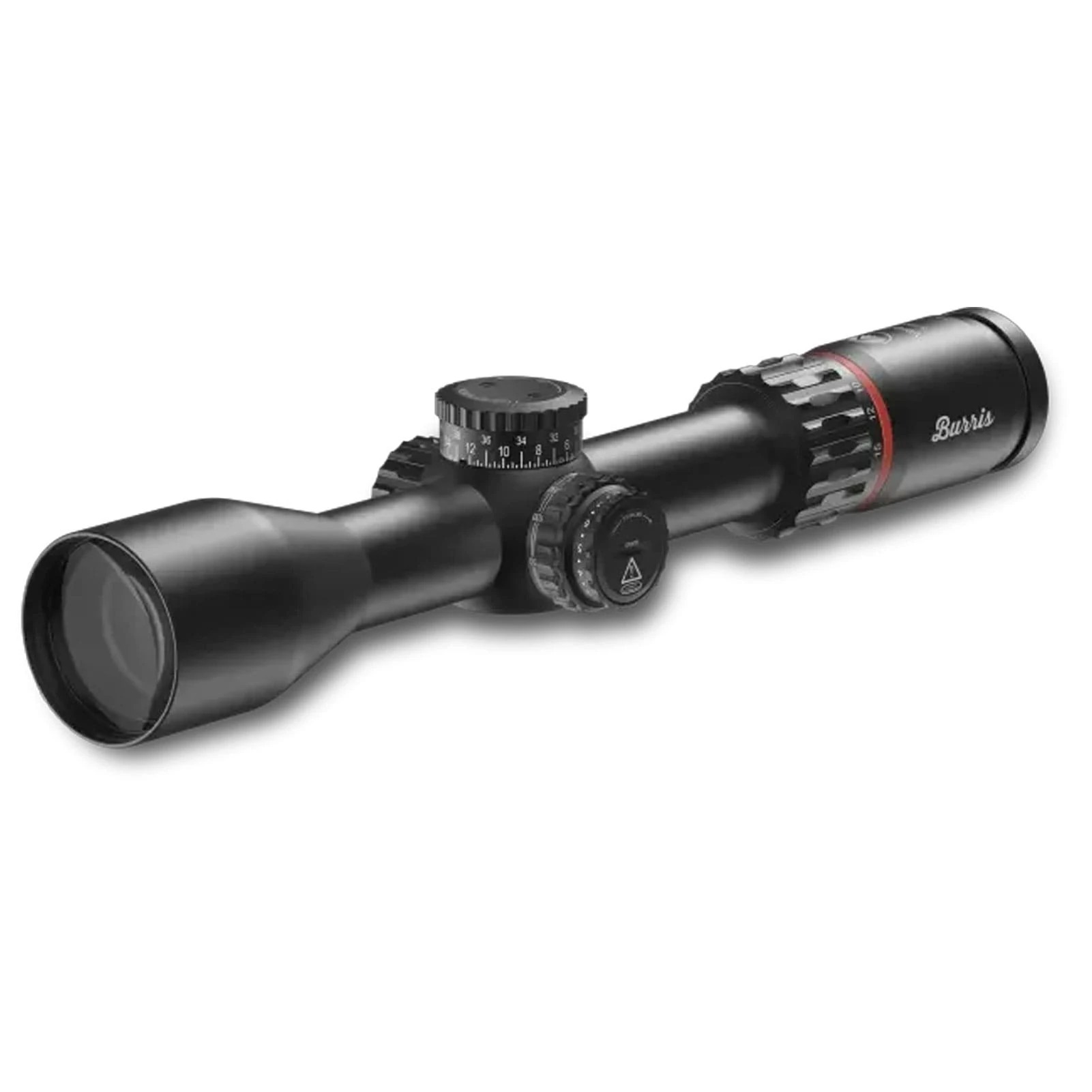
The Burris Veracity 3-15×44 is a variable-power hunting scope with a Fiber Plex reticle and 30mm tube. This Burris Veracity identifies the specific configuration.
Intended use: Hunting across varied terrain where a moderate magnification range is more useful than extreme upper-end magnification.
Tradeoffs:
- Other Veracity models can use different configurations.
- Mounting requirements depend on the rifle, rings, and desired eye position.
- The configuration may be less suited to target shooting, where very high magnification and dedicated precision reticles or turret systems may be more appropriate.
SIG SAUER Whiskey 4 6-24×50: Higher-Magnification Hunting Option
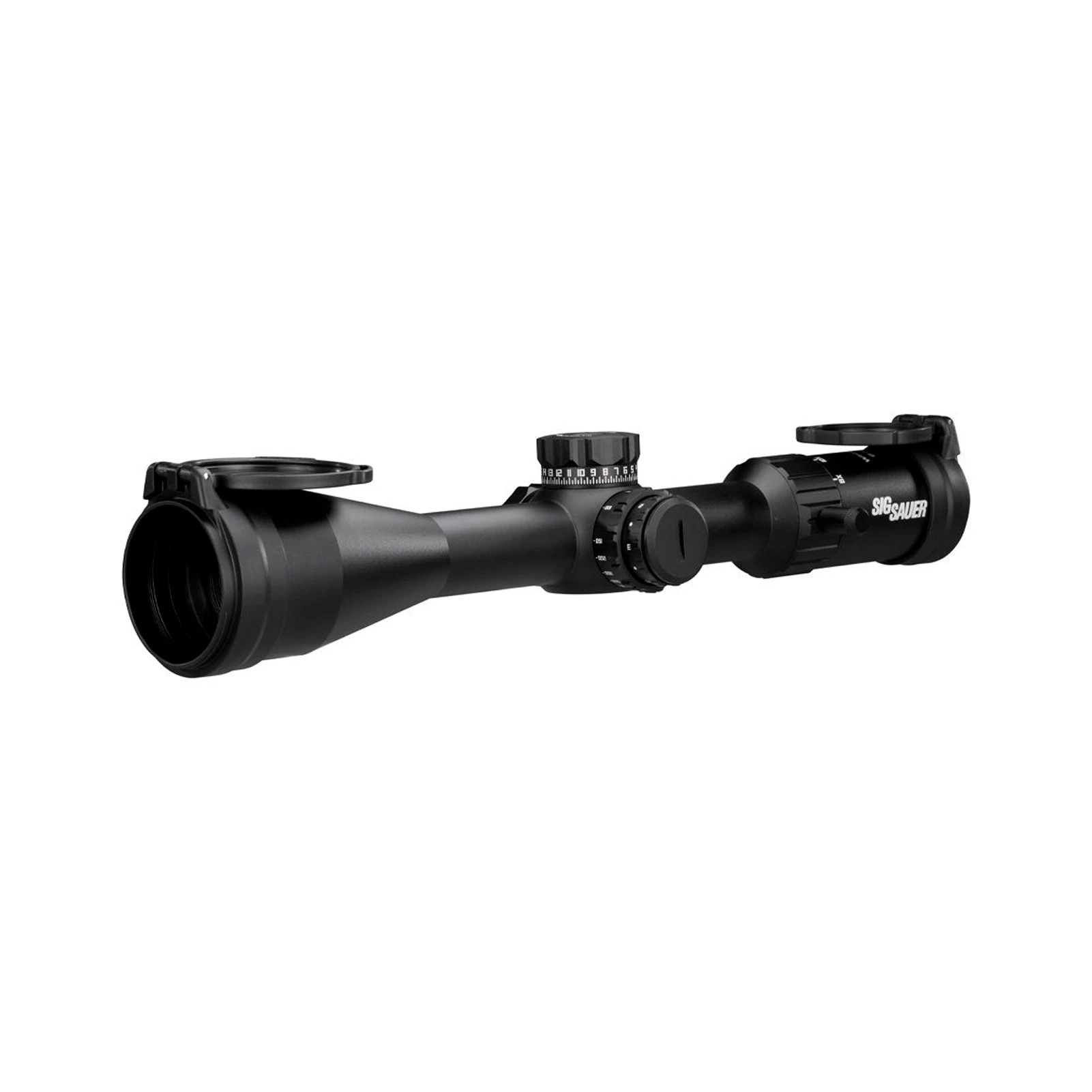
The SIG SAUER Whiskey 4 6-24×50 is a higher-magnification hunting configuration. This SIG SAUER Whiskey 4 identifies the specific product.
Intended use: Hunting at distances where additional magnification is useful and a higher minimum power is acceptable.
Tradeoffs:
- The 6× minimum magnification may be less suitable when a wide field of view is the priority.
- Reticle references, dimensions, and warranty terms should be confirmed against current documentation.
Precision-Focused Alternatives to Compare
For more specialized precision-oriented setups, additional models can be compared by magnification range, ranging capability, and hunting-oriented reticle or turret features.
- Higher-magnification options: Bushnell XRS3, Leupold MK5 HD, Nightforce ATACR, Kahles 540i, and Vortex Razor HD Gen III
- Mid-to-high magnification: Trijicon Tenmile HX, Zeiss LRP S5, and Leica PRS
- Integrated ranging: Burris Eliminator 6
- Hunting-oriented precision: Swarovski Z8i with a second-focal-plane duplex reticle and compatible ballistic turret system
Burris Eliminator 6 4-20×52: Integrated Rangefinding Configuration
The Burris Eliminator 6 4-20×52 combines a 4-20× magnification range with a 52mm objective and an integrated rangefinder. This configuration can reduce the need for a separate rangefinding device in the field.
Intended use: Hunting setups where integrated rangefinding capability is a priority and a moderate-to-high magnification range fits the shooting conditions.
Tradeoffs:
- The 4× minimum magnification may be less suitable when a wider field of view is needed.
- The integrated rangefinder may add less value to setups that already use a separate rangefinder.
- Exact reticle and other configuration details should be confirmed against current product documentation.
Zeiss LRP S5 5-25×56: High-Magnification Precision Option
The Zeiss LRP S5 5-25×56 combines a 5-25× magnification range with a 56mm objective. The higher magnification range makes it better suited to applications where detailed views of distant targets are important.
Intended use: Precision-focused shooting where higher magnification and a large objective are useful at longer distances.
Tradeoffs:
- The 5× minimum magnification may be less suitable when a wider field of view is needed.
- The 56mm objective can add bulk and may require attention to mounting clearance and height.
- Reticle, adjustment system, eye relief, weight, and tube specifications should be confirmed for the specific configuration.
Nightforce ATACR 7-35×56: Maximum-Magnification Precision Option
The Nightforce ATACR 7-35×56 has the highest maximum magnification among the five scopes in the comparison, with a 56mm objective. Its 7-35× range favors applications where high magnification takes priority over low-power versatility.
Intended use: Precision-oriented shooting where very high magnification is more important than a broad field of view at lower settings.
Tradeoffs:
- The 7× minimum magnification may be limiting for hunting situations that require a wider field of view.
- The high magnification range is less versatile for applications that rely on lower-power settings.
- Exact reticle, adjustment features, eye relief, weight, and tube diameter should be confirmed against current product documentation.
- med against current product documentation.
Build a Complete Field-Ready Optics Setup
A riflescope provides the aiming reference, while binoculars and rangefinders support observation and distance estimation.
Rangefinding and Ballistic Support
GritrSports carries sport optics for observation and ranging, including rangefinders and models with angle compensation or ballistic support.
Common roles include:
- Rangefinder: Measures distance and may provide angle or ballistic information.
- Binoculars: Support scanning and observation without using the rifle's optic.
- Ballistic tool: Helps organize rifle, ammunition, and environmental data.
- Mobile app: May connect with compatible optical devices or calculate corrections from entered information.
Protecting and Carrying Your Optics
Lens covers, protective cases, and suitable storage can help protect optical surfaces and adjustment controls. Follow the manufacturer's cleaning instructions.
Choose the Scope That Matches the Shooting Plan
Start with the intended use, then consider the expected distance, terrain, correction method, and rifle compatibility. Magnification, reticle design, adjustment system, and mounting requirements should work together rather than being evaluated in isolation.
Recent Posts
-
How to Choose Tactical Apparel and Gear for Hunting: A Step-by-Step Guide
Quick answer: How to Choose Tactical Hunting Apparel and Gear? To choose tactical hunting apparel a …Sep 18th 2026 -

2026 Buyer's Guide: Elite Rifle Scopes for Precision Hunting
A riflescope is part of a complete shooting system. Its optical design, controls, mounting requireme …Sep 2nd 2026 -

First-time 1911 Pistol Buyers' Guide
The 1911 is one of the most iconic and enduring handgun platforms in American history. Designed by J …Jul 31st 2026