
First-time 1911 Pistol Buyers' Guide
The 1911 is one of the most iconic and enduring handgun platforms in American history. Designed by John Moses Browning and adopted by the U.S. military in 1911, this single-action semi-automatic pistol has served soldiers, LEOs, competitive shooters, and civilians for over a century. We carry a wide selection of 1911 pistols for sale across multiple calibers, frame sizes, and configurations - from mil-spec classics to more modernized handguns - sourced from the world's most trusted manufacturers.
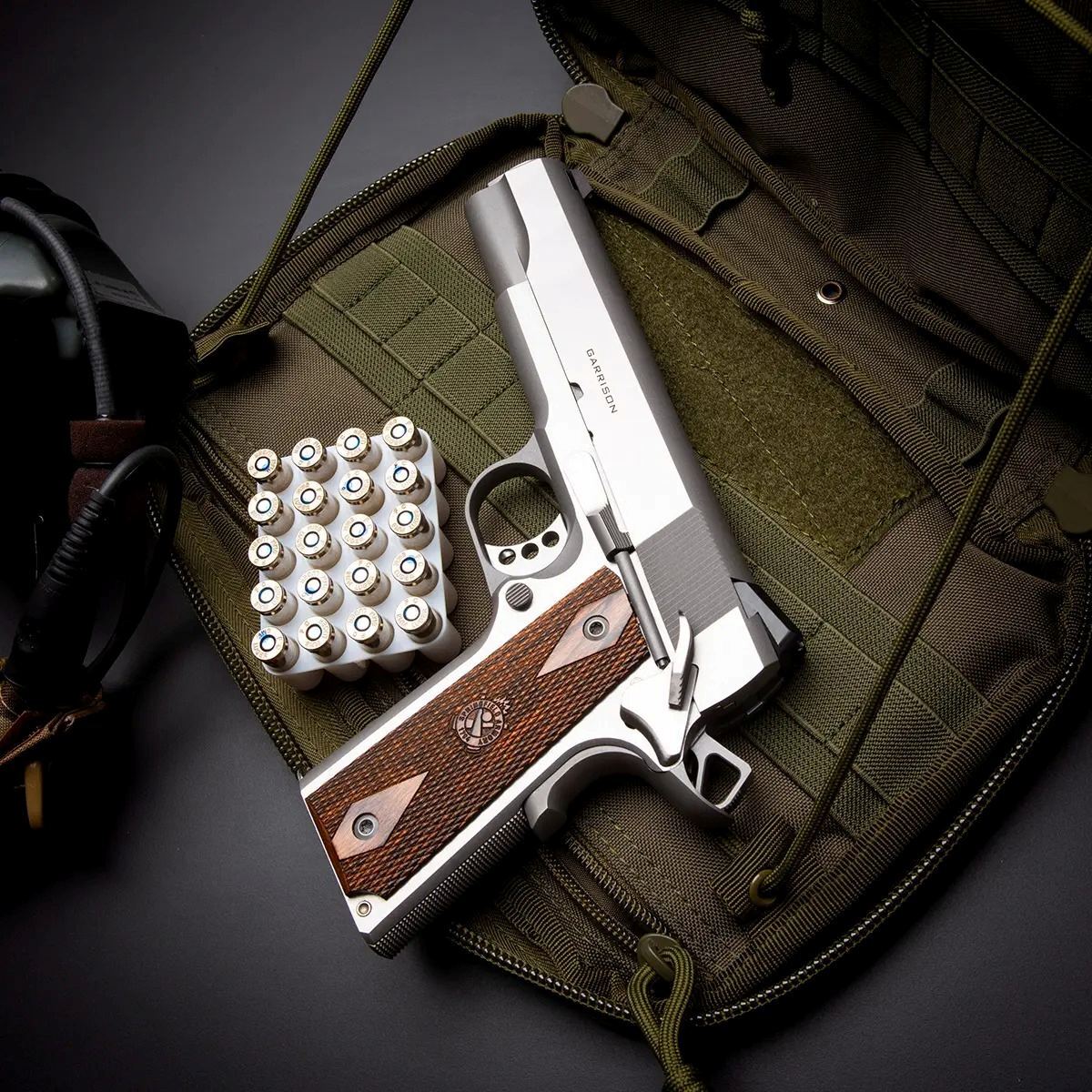
Quick Guide to 1911 Handgun Basics: Calibers, Sizes, Finishes
1911 Calibers
The caliber you choose will shape your shooting experience more than almost any other variable.
Classic .45 ACP
The .45 ACP (aka .45 Auto) is the round the traditional 1911 platform was built around. This cartridge fires a heavy, wide-diameter bullet (.452 inches) delivering significant stopping power at close range. Standard single-stack magazines hold 7 or 8 rounds. The all-metal frame of a traditional .45 ACP 1911 absorbs recoil effectively, making it a comfortable shooter despite the larger cartridge.
9mm 1911 Pistol
The 9mm 1911 pistol has become the most popular commercial chambering on the market. It offers several practical advantages: a single-stack 9mm magazine typically holds 10 rounds (compared to 7-8 for .45 ACP), recoil is noticeably lighter, and ammo costs less. Critically, you still get the 1911's renowned single-action trigger – one of the best in the industry. If you're shooting frequently, carrying concealed, or new to the platform, the low recoil 1911 9mm is an excellent starting point.
10mm 1911 for Hunting and Defense
The 10mm chambering delivers higher velocity and energy than either 9mm or .45 ACP, making it a strong choice for hunters and outdoorsmen. The 10mm 1911 is typically built on a Government-size frame to manage the cartridge's increased recoil. If you're in bear country or need a hard-hitting defensive round, the 10mm deserves serious consideration.
Other Calibers: .38 Super & .22 LR
The .38 Super 1911 offers a high-velocity option with a 9-round capacity, popular among competitive shooters. The .22 LR 1911 trainer is an ideal and cost-effective way to practice trigger mechanics and build muscle memory without the expense of centerfire ammo.
1911 Frame Sizes
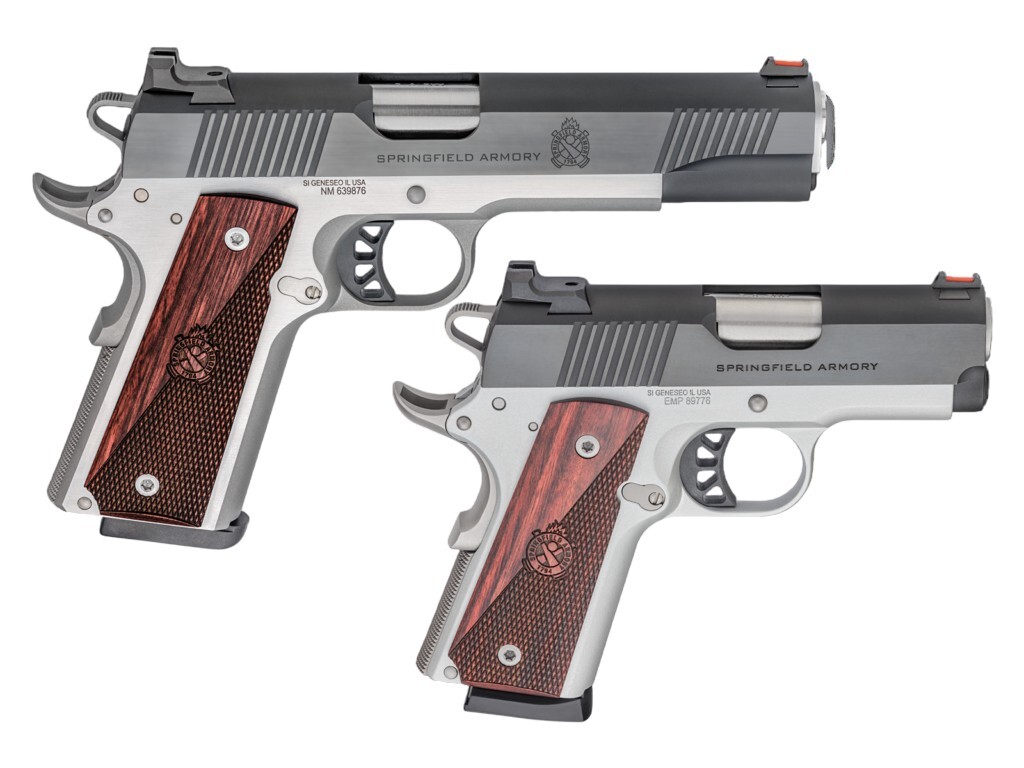
Government (Full Size) — 5-inch barrel
The standard Government 1911 features a 5-inch barrel and is the full-size 1911 pistol that Browning originally designed. It offers the longest sight radius, greatest accuracy potential, and the smoothest cycling. The Government frame is ideal for home defense, range use, and competition. Its weight – typically around 38-40 oz unloaded – helps dampen recoil, making it very comfortable to shoot.
Commander — 4.25-inch barrel
The 1911 Commander model reduces the barrel to 4.25 inches and trims overall length slightly. It carries nearly the same weight as the Government but is a touch easier to conceal. The Commander is a popular carry size 1911 for those who want the full 1911 shooting experience with slightly improved concealability. It's a well-balanced middle ground between the full-size and compact models.
Officer / Compact — 3.5-inch barrel
The officer frame 1911 is the most compact configuration, built specifically for concealed carry. At roughly 3.5 inches of barrel, it's shorter, lighter, and easier to conceal without printing. Trade-offs include reduced magazine capacity and a shorter sight radius. If a concealed carry 1911 is your primary goal, this is the size to focus on.
1911 Finishes
A 1911's finish affects its appearance and durability. A stainless 1911, like the Kimber 1911 Stainless II or Springfield 1911 Mil-Spec, has excellent corrosion resistance and requires less maintenance, which is ideal for use in humid climates.
Traditional blued (Colt 1911 70 Series) finish provides a classic black look but requires more care. It will wear over time, especially on a carry gun, but many shooters consider that honest wear part of the pistol's character. A well-blued 1911 that's been carried daily develops a patina that tells a story.
Diamond-Like Carbon (DLC) looks almost identical to bluing but offers dramatically better wear resistance. And if you like the looks of a stainless gun, you might want to consider hard chrome (HC). One of the most durable finishes available, it’s corrosion-resistant and looks similar to stainless steel with a slightly brighter sheen; yet it can feel slippery on bare metal grip surfaces.
You’ll also see a lot of cerakote 1911 handguns that look like custom guns. It’s a polymer-based coating available in virtually any color that offers good corrosion resistance.
Finally, there’s nitride finish. A surface-hardening process rather than a coating, nitride penetrates the metal itself. It offers excellent corrosion protection and durability, and it doesn't add meaningful thickness to tight-tolerance parts. Unlike Cerakote, it won't flake off.
Also, there’s an option of a two-tone 1911, like the S&W 1911 or some two-tone Kimbers and Springfield pistols.
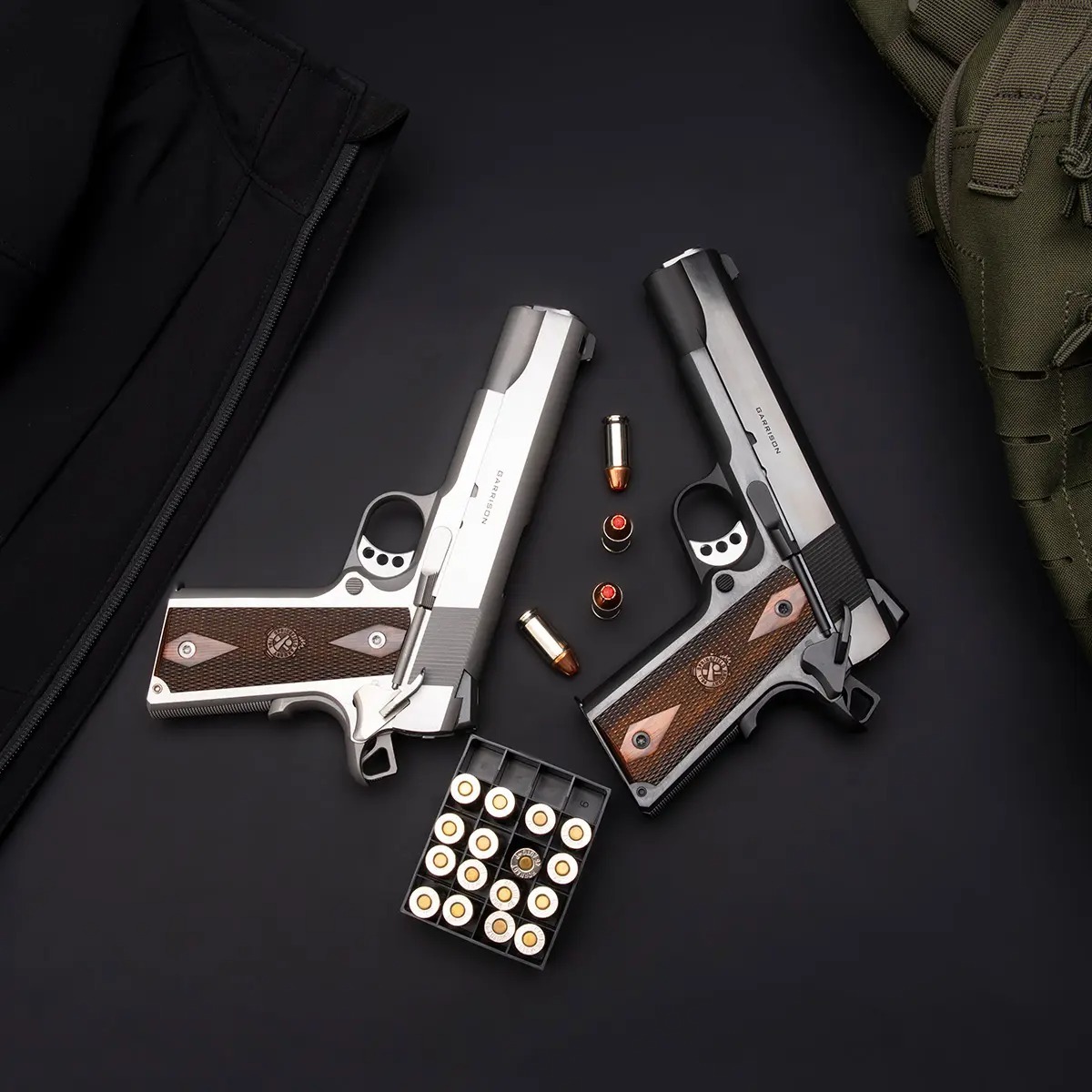
1911 Brands by Budget
Entry-Level ($400–$700)
Rock Island Armory (RIA) and Tisas produce reliable, no-frills 1911s that are an excellent entry point to the platform – forged frames, solid construction, and straightforward performance. Taurus also sits firmly in this bracket, providing budget-friendly 1911s that are a good way to get into the platform without a heavy investment.
Mid-Range ($700–$2,000)
This is where the market really opens up, and each major manufacturer brings a distinct approach.
Springfield Armory covers an exceptionally wide range, from GI-spec models up to high-end competition pistols. The Garrison and Loaded are strong all-rounders, while the TRP is purpose-built for demanding use.
Kimber has a vast selection across all price points, with both modern designs and classic series to choose from – one of the broadest 1911 lineups in the industry.
SIG Sauer modernizes the 1911 platform with features like external extractors and unique slide profiles, offering a distinctly different take on the classic design.
Colt, the original manufacturer of the 1911, appeals strongly to collectors with its classic series while also producing a full line of pistols for defensive and sporting use.
Dan Wesson sits at the top of this bracket, offering near-custom quality with forged components, tight tolerances, and a reputation that holds up to scrutiny.
High-End and Semi-Custom ($2,000+)
Wilson Combat, Nighthawk Custom, Ed Brown, and Les Baer all operate on the “one gun, one gunsmith” philosophy. Tolerances are tight, fit and finish are exceptional, and accuracy guarantees are common at this level. Bul Armory offers comparable fit and finish at a more accessible price point.
1911 Pistols by Application
For Home Defense
Look for a Government-size model with a rail for mounting a weapon light. Night sights (either tritium front or a U-dot configuration) allow for fast target acquisition in low light. Models like the Springfield Armory 1911 Operator are purpose-built for this role.
For Concealed Carry
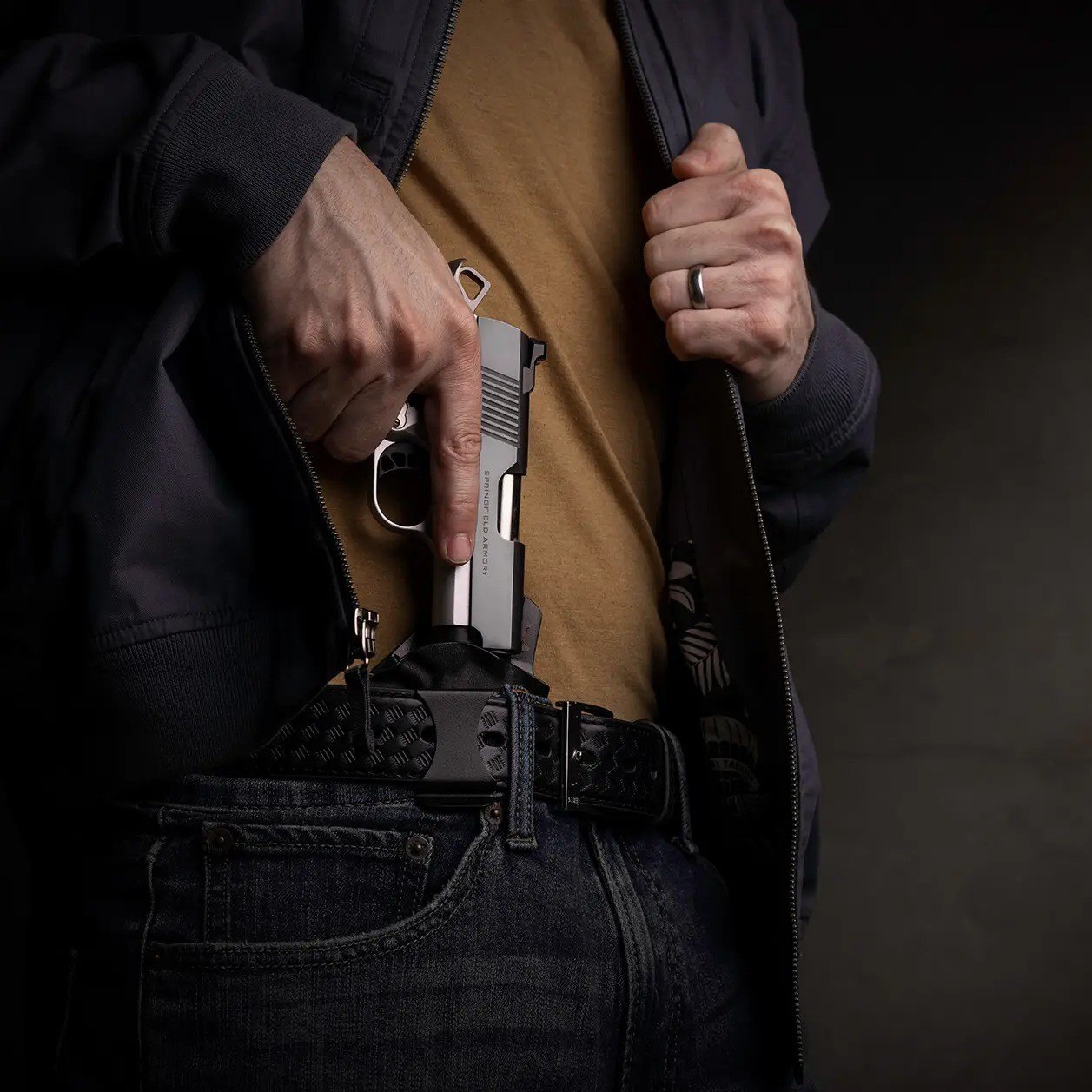
Commander-size models (4"-4.25" barrel) offer a meaningful reduction in length and weight without dramatically affecting shootability. For those wanting something smaller, the 3" Officer-size platform trades some capacity and velocity for a genuinely pocketable profile. The Springfield EMP as well as Kimber Pro Carry and Ultra Carry in 9mm is a strong option in this category.
For Competition
Double-stack 1911s and 2011-pattern pistols dominate competitive shooting. Higher capacity, tighter tolerances, and optics-ready configurations make them the preferred choice for USPSA, IDPA, and 3-Gun competitors. The Springfield DS Prodigy, Kimber 1911 DS Warrior, Kimber 2K11 and Staccato 2011 lineup are worth serious consideration here.
For the Range and Collection
Sometimes a 1911 is just a joy to shoot and admire. Classic blued steel, wood grips, and traditional lines make for a firearm that's as much an object of craftsmanship as it is a tool. Brands like Wilson Combat, Dan Wesson, Nighthawk Custom, and Les Baer produce pieces that blur the line between firearm and fine instrument.
Understanding 1911 vs 2011
The standard 1911 uses a single-stack magazine, meaning rounds are stacked in a single column. This gives the pistol its famously slim grip profile – one of its best features for concealed carry – but limits capacity to 7–10 rounds depending on caliber.
The 2011 (also referred to as a double stack 1911 or race 1911) takes Browning's original design and adds a modular, double-stack grip frame capable of holding 15, 17, or even 20+ rounds of 9mm. The defining characteristic of a true 2011 is its detachable grip module – a screw near the front corner of the trigger guard allows the grip to be separated from the frame for customization and replacement.
FAQ
Does a 1911 feed hollow-point ammunition reliably?
Modern production 1911s usually handle hollow-points well because manufacturers now include throated barrels and polished feed ramps. However, traditional or strictly GI-spec "mil-spec" models may still struggle with wide-cavity hollow points and require round-nose (ball) profiles or specialized defensive ammo like Hornady Critical Defense.
Is a break-in period required for 1911?
Yes, many 1911s (especially those built to tighter, match-grade tolerances) need a break-in of roughly 200 to 500 rounds of FMJ before they run completely smoothly. During this period, the slide and frame rails mate more precisely, and small burrs wear away.
Is the 1911 prone to jamming or extraction issues?
A properly built and maintained 1911 is not inherently prone to jamming. Extractor tension is critical; if it’s not adjusted correctly, failures to extract or eject can occur. Choosing a reputable manufacturer and performing basic maintenance go a long way toward avoiding problems.
How sensitive is the 1911 platform to magazine quality?
The 1911 is notoriously picky about magazines. Many failures to feed can be traced directly to cheap or out-of-spec magazines. Sticking with proven magazines from makers like Wilson Combat, Chip McCormick, or Tripp Research solves the vast majority of feeding issues.
.45 ACP or 9mm: Which 1911 should I choose?
Go with 9mm if you want less recoil, higher magazine capacity, lower ammo cost, and a softer-shooting gun for frequent training or competition. Choose .45 ACP if you want the classic chambering and the soft-push recoil.
What 1911 frame size is right for me?
- Government (5″ barrel): Best for home defense, competition, maximum accuracy, and softest recoil.
- Commander (4.25″ barrel): Best all-rounder; retains a full grip capacity but is shorter and balances well.
- Officer (3.5″ barrel): Best strictly for concealed carry, though more prone to timing/reliability issues due to the short slide stroke.
Is a 1911 too heavy for everyday concealed carry?
For most people, yes, unless paired with a high-quality gun belt and holster. A steel Government model weighs around 40 ounces empty. If you plan to carry daily, look for a Commander or Officer model featuring an aluminum alloy frame to shed roughly 10-12 ounces.
What is the difference between Series 70 and Series 80?
Series 70 1911s have no firing pin safety, which typically results in a slightly crisper, less complicated trigger pull. Series 80 pistols incorporate a firing pin block actuated by the trigger for an added drop-safety measure, which can add a bit of take-up. Both are perfectly safe when the gun is in proper working order.
Are the sights adjustable, and what cut do they use?
Many 1911s come with a fixed rear sight dovetailed into a Novak-style cut, which is low-profile and ideal for carry. Target and competition models often have fully adjustable rear sights that sit higher. Aftermarket options are plentiful for both types.
What materials are 1911 frames made from?
Most are either forged carbon steel (very strong, traditional heft), stainless steel (corrosion resistant, lower maintenance), or cast steel (found on some budget guns, still serviceable). High-end builders often use machined billet steel for maximum consistency. Aluminum frames are common on lightweight carry models.
Can I easily swap grips and safety levers on a 1911?
Grips are extremely easy to change with just a screwdriver and are one of the most common first upgrades. Swapping a thumb safety or grip safety requires some fitting knowledge and should usually be done by a gunsmith unless you’re experienced, as the engagement surfaces must be fitted correctly for safe operation.
What do I get by upgrading to a semi-custom or custom 1911?
Upgrading to premium makers like Dan Wesson, Wilson Combat, Nighthawk Custom, Ed Brown, or Les Baer gets you hand-fitted craftsmanship. There are no machine marks, the slide feels like it runs on ball bearings, the trigger is match-grade perfect, and the gun is built to achieve match-grade accuracy out of the box.
Recent Posts
-

How to Choose Tactical Apparel and Gear for Hunting: A Step-by-Step Guide
Quick answer: How to Choose Tactical Hunting Apparel and Gear? To choose tactical hunting apparel a …Sep 18th 2026 -

2026 Buyer's Guide: Elite Rifle Scopes for Precision Hunting
A riflescope is part of a complete shooting system. Its optical design, controls, mounting requireme …Sep 2nd 2026 -
First-time 1911 Pistol Buyers' Guide
The 1911 is one of the most iconic and enduring handgun platforms in American history. Designed by J …Jul 31st 2026