
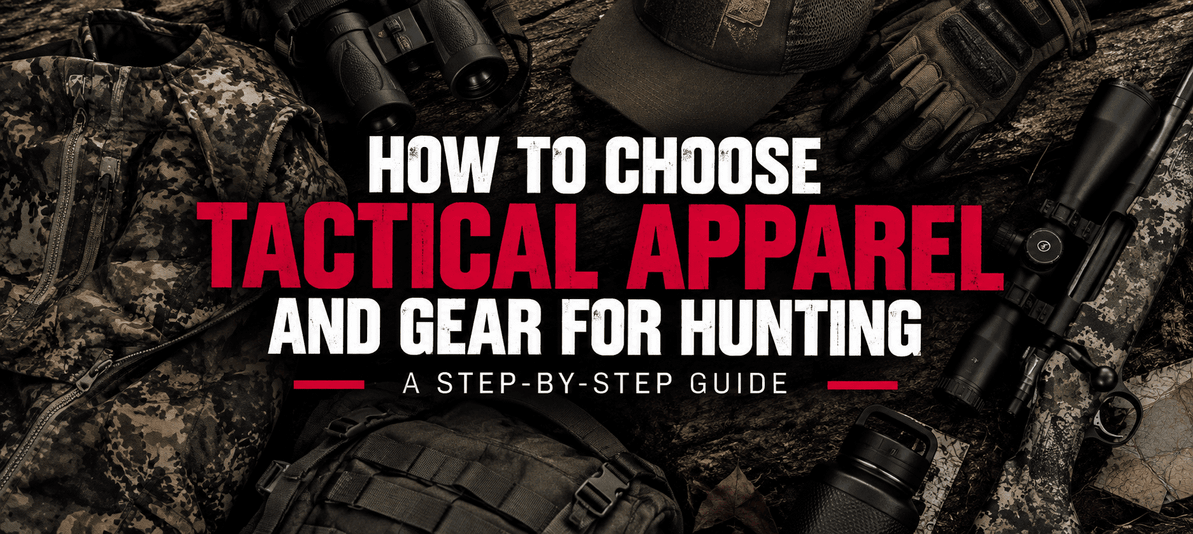
How to Choose Tactical Apparel and Gear for Hunting: A Step-by-Step Guide
Quick answer: How to Choose Tactical Hunting Apparel and Gear?
To choose tactical hunting apparel and gear, start with the conditions of your hunt - weather, terrain, activity level, hunting method, and time in the field. Build adjustable clothing layers, choose boots for the ground and distance you'll cover, select a stable carry system, and pack only the tools you need. Test the full setup together, then confirm current local safety and hunting requirements before you head out.
A durable-looking jacket or boots with an aggressive tread pattern doesn't automatically make good hunting gear. If the warmth, camouflage, fit, noise level, or load-carrying capacity doesn't match your actual hunt, you'll notice the mismatch the moment you're a mile into cold, wet terrain. This guide walks through a repeatable buying sequence: define your conditions and tasks first, then build clothing layers, footwear, carry gear, and field tools around them.
Step 1: Define Your Hunt Conditions and Movement Level
First, define your hunt profile: expected weather conditions (temperature, precipitation, wind), terrain, season, activity level, hunting method, and trip duration.
Then, list all the gear you’ll carry: pack, binoculars, calls, ammunition, navigation equipment, weather protection, and firearm. Each item affects pocket access, garment fit, pack dimensions, and total load.
Gritr Sports advises hunters to weigh camouflage effectiveness, comfort, concealment, and weather resistance together when selecting hunting apparel.
Match Clothing and Gear to Weather and Movement
| Hunt condition or task | Weather and movement considerations | Layering Approach | Footwear and traction needs | Storage and pack compatibility | Core apparel and gear categories |
|---|---|---|---|---|---|
| Cold stationary hunting | Low movement can reduce body heat; wind and precipitation may increase exposure | Moisture-managing base layer, insulating mid-layer, protective outer layer; optional heated clothing | Insulated, supportive footwear suited to the surface; traction design verified on the listing | Allow space for spare insulation, gloves, and weather protection without blocking access | Base layers, insulation, quiet outerwear, gloves, headwear, boots, seat or blind equipment |
| Wet-weather hunting | Persistent moisture; activity may create internal moisture | Quick-drying base layer, adjustable insulation, waterproof and breathable rain layer | Water-protection features and traction suited to wet ground | Weather-protected storage; pack and rain-cover compatibility | Rain jacket and pants, base layer, boots, gloves, headwear, protected navigation tools |
| Warm-weather hunting | Heat and higher moisture output during movement | Lightweight moisture-managing clothing with sun and brush protection as needed | Flexible footwear with terrain-appropriate traction | Hydration access and low-bulk storage | Lightweight shirt and pants, cap, boots, hydration, navigation tools |
| High-mobility hunting | Sustained exertion, changing pace, and frequent terrain changes | Lightweight base layer with removable insulation and a packable outer layer | Support, flexibility, and traction matched to terrain and load | Stable pack fit with unrestricted shoulder, hip, and firearm movement | Base layer, adaptable outerwear, boots, pack, hydration, navigation, binoculars |
|
Stand hunting |
Long periods of limited movement; quiet access and position changes | Moisture-managing base layer, insulation selected for exposure, quiet outer layer | Stable footing and traction for the approach and stand area | Storage must remain accessible from the seated or standing position |
Quiet apparel, boots, gloves, headwear, seat, blind or treestand equipment |
Rule of thumb: dress for the activity level you expect while moving, then pack insulation and weather protection for the time you expect to be still.
Step 2: Build a Three-Layer Clothing System
Once you define the hunt profile, choose tactical hunting apparel and gear as a connected system. A three-layer setup manages moisture near your skin, adds adjustable insulation, and protects you from wind, water, and brush. Gritr Sports recommends a layered hunting clothing system built on moisture-managing synthetic or Merino wool base layers and quiet, camouflage outer layers.
Adjust the system as your activity changes. Remove or vent insulation before strenuous movement. Add warmth before a long stationary period, and put on weather protection before the underlying layers become wet.
Base layer: manage moisture
Lightweight base layers wick moisture and dry quickly but offer limited insulation, making them a fit for mild conditions. Midweight layers, often made from Merino wool, add insulation and next-to-skin comfort with natural odor resistance. Heavyweight hunting base layers and clothing provide the most insulation for cold conditions. Polyester is a common material for lightweight base layers.
A base layer should fit close enough to manage moisture without restricting movement. Test it under your insulating layer and outerwear because seams, cuffs, and waistbands can overlap.
Mid-layer: add adjustable warmth
The mid-layer retains warmth and gives you a practical way to respond to changing activity. Hoodies, vests, and pullovers regulate body temperature while remaining easy to shed when you warm up during exertion.
Choose insulation according to movement, exposure, and time spent stationary. Check whether the garment fits over your base layer and under the outer layer without compressing movement around the shoulders, elbows, waist, or knees.
Outer layer: block wind, rain, and brush
Outer hunting jackets, vests, pants, and bibs help manage wind, precipitation, and contact with brush. Quiet fabric matters here because rustling can disrupt a hunt.
When comparing weather-protective hunting apparel and gear, look for options from brands such as Banded, Drake, and Beretta, then verify each product’s stated waterproofing, breathability, insulation, and intended use on its product page. Before buying any Аgarment, confirm the material, insulation, water and wind resistance, garment weight, pocket layout, sizing, and care instructions.
Heated hunting apparel can add comfort on harsh cold-weather hunts, but treat it as an optional add-on rather than a substitute for a properly matched layering system.
Step 3: Choose Hunting Boots for Terrain, Distance, and Load
Choose hunting boots and shoes for the ground you will cover, the distance you expect to walk, the weather, and the load you will carry. When comparing options from brands such as Viktos, Kenetrek, Muck Boot, and Merrell,, focus on the features that fit your hunting conditions: support and stability for uneven terrain, waterproof protection for wet ground, insulation for cold and stationary hunts. GritrSports advises stiff, supportive boots for mountain hunting and lighter, more flexible boots for flatter terrain. Uneven surfaces and heavier loads may require more structure, while flat ground may allow greater flexibility.
Before buying, run through a quick boot-fit check:
- Heel stays secure with minimal lift
- Enough toe room for downhill movement
- No pressure points at the cuff or instep
- Fit works with your intended socks and insoles
- Boots are broken in before hunting day
Boot fit is only part of the footwear system. Test boots with the socks, insoles, pants, and gaiters you expect to wear in the field, especially if you will hunt in cold or wet conditions. A boot that feels comfortable in a store can fit differently once you add thicker socks, an insole, or several miles of walking.
Choose Gloves, Headwear, and Eye Protection for the Task
Gloves can retain warmth while supporting the finger control needed for precise shooting. Evaluate palm grip, trigger-finger movement, cuff fit, insulation, closure design, and touchscreen compatibility. Test firearm handling only in a safe setting while following all handling rules.
Hats help maintain comfort in cold weather, while caps provide shade during sunny conditions. Check whether your headwear fits with hearing or eye protection and whether it affects peripheral vision.
Eye protection belongs in the personal-protection review whenever the activity or environment calls for it. GritrSports carries tactical and self-defense apparel and equipment categories that include eye protection, shooting gloves, moisture-wicking shirts, ripstop pants, water-resistant jackets, and tactical boots.
Protective clothing supports comfort and reduces exposure to field hazards. It does not replace safe firearm handling, required hunter education, environmental awareness, or applicable hunting rules.
Step 4: Choose a Pack and Carry System That Works With Your Clothing
Choose a pack, belt, or rig only after you know what you need to carry and how you need to access it. Sort your gear into three groups: immediate-access items like water, calls, and gloves; protected items like electronics and first-aid supplies; and occasional-use items like extra layers or decoys.
A compact day pack suits short hunts with essential gear, while a larger pack handles additional layers, water, and variable weather on longer trips. Belt- or chest-mounted storage, including bandoliers, can work well if it stays stable and doesn't conflict with pack straps or your shooting position – Gritr Sports offers single-row and double-row bandoliers in leather and synthetic materials, along with shell holders that can be belt-worn or attached directly to a shotgun.
Step 5: Keep Firearm Purchases Separate From Apparel and Gear Orders
Clothing, boots, packs, trail cameras, and other non-regulated hunting gear typically follow the retailer’s standard shipping and return processes. Confirm the seller’s current sizing guidance, shipping options, return policy, and warranty information before ordering Firearms are subject to a separate purchasing and fulfillment process
Know When FFL Fulfillment applies
An online firearm order does not ship directly to the buyer’s home. The firearm is sent to a local Federal Firearms Licensee, or FFL, where the buyer completes the applicable background check and the normal transfer process before taking possession.
Before initiating a firearm order, confirm the current federal, state, and local requirements with the receiving FFL and the relevant authorities in your area. Requirements and procedures can vary by jurisdiction, so this guide should not replace current information from the FFL or the responsible government authority.
Step 6: Complete a Safety and Legal Review
Before hunting, confirm the current local rules and safety requirements that may affect your clothing, equipment, and route. Review the requirements for licenses, tags, hunter education, seasons, legal hunting methods, required safety clothing, and the use of public land, stands, blinds, or trail cameras. If you plan to hunt from an elevated stand, include appropriate fall-protection equipment in your preparation.
Hunting regulations and safety requirements vary by state and can also differ by hunting area, land manager, and species. Check the current guidance from your state wildlife agency and the authority responsible for the specific property where you plan to hunt. Do not rely on general guidance alone when preparing for a trip.
Final Checklist: Is Your Hunting Kit Ready?
- My layers match the expected weather and activity level
- My boots fit with my planned socks, insoles, pants, and gaiters
- My pack carries realistic weight without restricting movement
- I can reach water, navigation, headlamp, first aid, and tags without digging
- My apparel, sling, pack, and accessories work together without conflict
- I tested the full setup while walking, kneeling, sitting, and in my normal hunting position
- I checked current hunting, land-use, and visibility requirements
- A trusted person knows my route and expected return time
Review current hunting apparel, footwear, and field-gear options against this checklist before you commit to a purchase - it's the fastest way to avoid buying something that looks capable but doesn't fit your actual hunt.
FAQ
What is tactical hunting apparel?
Tactical hunting apparel borrows design features from military and duty gear - reinforced knees and seams, modular pockets, and durable synthetic fabrics - and applies them to hunting clothing. It's built for durability and functionality, but hunting suitability still depends on matching camouflage, warmth, and noise level to your specific conditions.
What should I wear for cold and wet hunting?
Wear a moisture-managing base layer, add an insulating mid-layer for periods of low activity, and finish with a wind- and rain-protective outer layer. Avoid cotton in these conditions, since it loses insulating ability and takes a long time to dry once wet. Check each layer's waterproofing and weight rating on the manufacturer page before buying.
Do I need camouflage for hunting?
Camouflage effectiveness depends on your terrain and the species you're hunting, not a single universal pattern. Prioritize concealment, comfort, and weather resistance together when choosing a pattern for your specific environment. A pattern suited to dense woods may work poorly in open fields or snow.
How should hunting boots fit?
A well-fitting hunting boot holds your heel secure with minimal lift, leaves enough toe room for downhill movement, and avoids pressure points at the cuff or instep. Always test fit with the socks and insoles you plan to wear in the field, and break boots in before hunting day.
Should I use a hunting pack, chest rig, or belt system?
The right choice depends on what you need to carry and how quickly you need to access it. Compact packs suit short hunts with minimal gear, while belts or chest rigs work well for items you need instantly, provided they don't conflict with your pack straps or shooting position. Test any system loaded and in motion before relying on it.
What gear should I carry on every hunt?
At minimum, carry water, navigation tools, a first-aid kit, your license and tags, and weather-appropriate layers. Beyond that, add task-specific tools - binoculars, calls, a headlamp, or a trail camera - based on your hunting method and trip length rather than carrying everything available.
Recent Posts
-
How to Choose Tactical Apparel and Gear for Hunting: A Step-by-Step Guide
Quick answer: How to Choose Tactical Hunting Apparel and Gear? To choose tactical hunting apparel a …Sep 18th 2026 -

2026 Buyer's Guide: Elite Rifle Scopes for Precision Hunting
A riflescope is part of a complete shooting system. Its optical design, controls, mounting requireme …Sep 2nd 2026 -
First-time 1911 Pistol Buyers' Guide
The 1911 is one of the most iconic and enduring handgun platforms in American history. Designed by J …Jul 31st 2026